Tuesday, 19 June 2012

Stuffed Vine Leaves


Stuffed vine leaves are one of my favourite Greek dishes, whenever I go out they are always ordered, so I have tasted a fair few. When Spring arrived and the vines started to grow leaves I thoutgh ‘Mmmmm, how hard can it be?!’
The truth is that it's not hard, just a touch fiddly, I like them so much that the fiddling doesn’t put me off and perhaps the genius part of the whole thing is that, much like a stir fry, anything goes! Any veg that you have lying around the fridge is fair game. You can use fresh herbs or dried, the result is much the same though I think the fresher the better.
This is a step by step guide to making stuffed vine leaves.
First off your going to need the following ingredients:
 
30 – 40            Vine leaves – I use fresh leaves but you can use jarred or frozen leaves.
1                      Red pepper
1                      Large carrot
1                      Fist full of fresh coriander
1                      Fist full of fresh basil
1                      Table spoon dried oregano
1                      Large red onion
2                      Cloves of garlic
8 – 10              Baby tomatoes
1 500g            Tin of tomatoes
2                      Large tomatoes
1                      Stock cube  - I use chicken
300g                Short grain rice
Salt and pepper to taste

If using fresh vine leaves collect 30 to 40, they should have a diameter of between 12 and 18cm. Try to take younger leafs and please try not to take them all from the same plant.
Once you have your leaves you need to wash them and cut the stalks completely off. Now that they are clean pile them into stacks of ten or so and role them into a cylinder resembling a cigar.
Using tongs submerge the leafs in a pot of boiling water for 3 – 5 seconds and then place them on a plate to cool.  Keep the water and add the stock cube to the water, turn the water down to a very low heat.

Peel the onion and the garlic and throw them into the food processor. You want to blend them into finely diced pieces, alternatively if you don’t have a food processor you can grate them.
The carrot and the pepper should be cut into small pieces and added to the onion and garlic.
Put a large wok or deep frying pan onto a medium high heat and add up to 4 tablespoons of olive oil. Once the oil is hot (but not smoking) add the onion, garlic, carrot and red pepper, cook these until they soften. When they’re soft add the rice and turn the heat down you will need a medium heat from now on.
You will need to ladle in the stock, it’s much like cooking a risotto, after you have added 3 – 4 ladles of stock add the coriander and basil and then the tinned chopped tomatoes.  The rice should be half cooked. It will be cooked the whole way through later on. Once you're at this stage take the pan off the heat and let it cool.

Unroll the vine leaves so that they are flat. Find the larger leaves and put these to one side, if there are any torn ones keep these aside too. Take a large pan or casserole dish and pour in a generous amount of olive oil (several glugs), now place as many of the torn leaves as you need to cover the base of the pan, this will stop your stuffed vine leafs from burning. Add a little more olive oil to the topside of the leaves.
On a dinner plate place one leaf upside down so that the underside of the leaf is now on top. Using a desert spoon, put just under spoon's worth of stuffing on the leaf. Next up you need to fold it. Try to get it as tight as possible, fold the left and right sides over one another and then roll the leaf, it should look like a pillow when you're done. Take the now stuffed leaf and put it into the pan which has the other leaves lining the bottom, you should put them on the edge of the pan creating a ring and work your way in, If you have a few too many just pile them up and make a second layer. 

Take the tomatoes and put them in the food processor, give them a really good nuke so that you are left with tomato pulp more than anything else and pour this over the stuffed vine leaves, you want to add some water so that the bottom leaves are just about covered and then a sprinkling of olive oil for good measure.

Cut a long sheet of aluminum foil and put a plate upside down in the middle. Lower the plate onto the stuffed vine leaves to act as a lid. Turn the heat on, you will need a very low heat. Leave the leaves cooking for about an hour or until all the water has been absorbed by the rice.
Once the water has been absorbed take them off the heat and serve hot or cold with some Greek yogurt.
Vine leaves are great and whilst they take a while to make they keep in the fridge for a few days and are wonderful snacks or starter dishes. 
Enjoy!

Monday, 18 June 2012

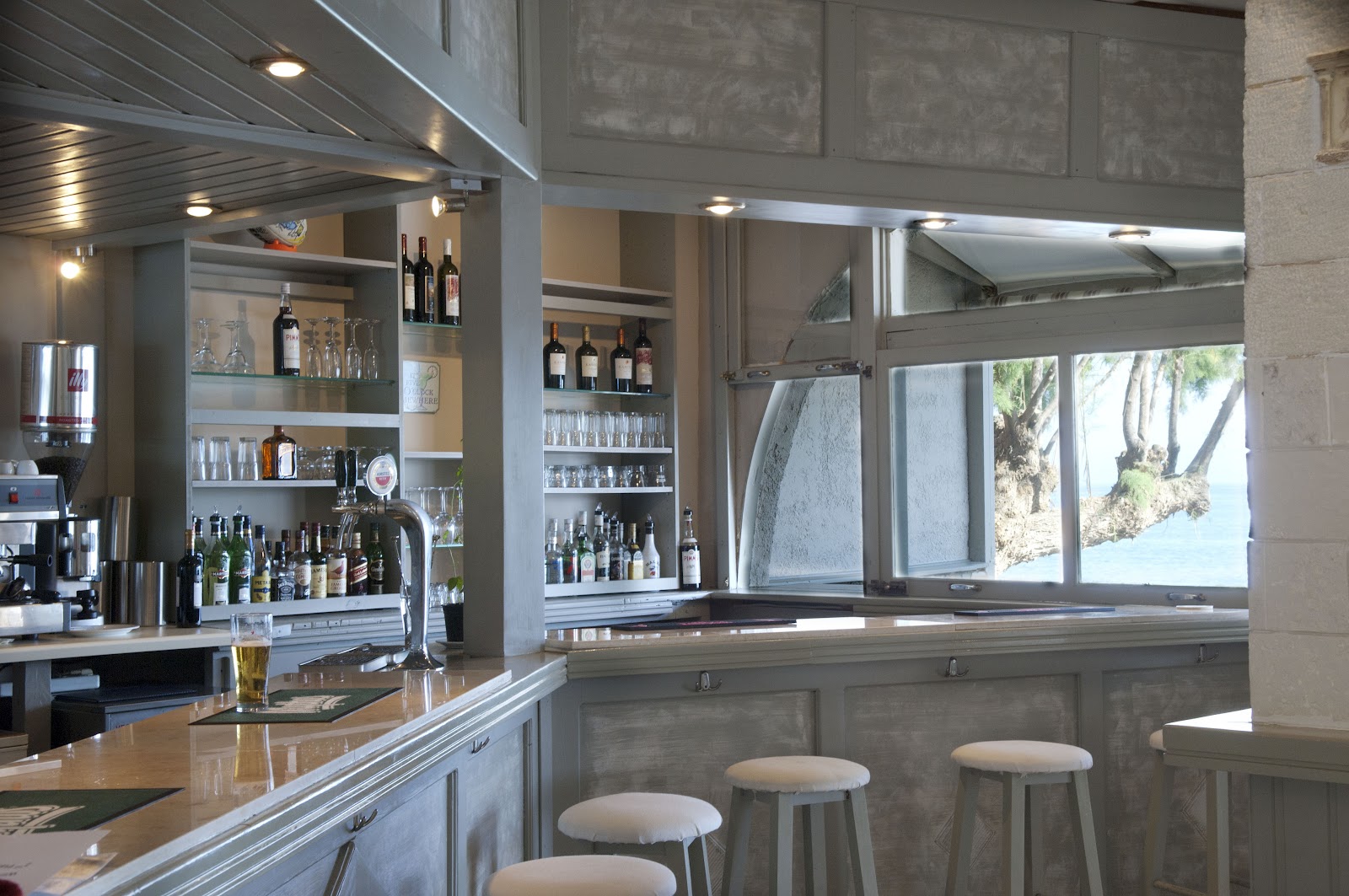
The Rock Bar


At the beginning of the year some “now friends” arrived in our office, they had recently moved to the island to retire. Most people retire to the island to sit in the sun and drink beer, not them, they retired to the island to sit in the sun and serve beer!

You see they had bought a bar in the seaside village of Makri Gialos, some 30kms away, on the south coast of the island. The bar once called “the Gecko” was aptly renamed the “Rock Bar” and, for lack of a better expression, was in a state.
 
My business partner, a rather brilliant and extremely well educated architect, leapt at the chance to sort it out with them. A budget was set, somewhat lower than the architect would have liked, but these are times of austerity and we must do everything for the least amount of money possible.


The renovations started in January and finished in March our friends wanted to do as much of it as possible themselves and so they became, cleaners, sanders, painters, varnishers, electricians, plumbers, movers, packers, seamstresses - you name it they were doing it. At one point I walked in to find her a little bit “high” having repainted the tiles in the bathrooms! I cannot quite give them all the credit as the pros were called in for the tricky parts but, one thing is for sure, they were there everyday from dawn to dusk and a bit longer.


The “Rock Bar” was designed to be a very comfortable lounge bar, a place where you can go to relax, enjoy a beverage, talk to your friends or make new ones - huge sofas engulf you on the veranda where you can enjoy some rather spectacular views of the bay.  Sports followers will be pleased to know that just about every major fixture - rugby, football (euro 2012), Olympics etc. that is played on the box is viewable - comfortable bar stools are available to help prop up the bar and your glass will never be empty!


The bar predominantly serves wines and beer along with simple sprit mixes, if you ask very nicely though, the owners can be convinced to make a cocktail or two!


The Rock Bar

Telephone number: +30 2843051300


Friday, 15 June 2012

Urban Austerity Farming


Over the last couple of years things have changed in Greece you don’t have to be a rocket scientist to work this out. There was once a day when money was cheap and toys where everywhere. While this was not the case for everyone, houses the size of castles sprung up out of the olive groves and to have three or four cars per family was not unusual, families took long and leisurely holidays to the other side of the world and yachts in the marinas where a dime a dozen.

Given the situation that Greece now finds herself in, things are tough and times have changed. Gone are all the luxuries huge taxation has rendered many toys to the dusty shelves of storage bays. Yachts have been sold and cars taken off the road, the people are struggling to live the high life that they once did.

This is not necessarily a bad thing, reality has set in and in a way we are going through a clearance. The people are becoming more and more resourceful, which is perhaps well described in this photograph.


A plot in the middle of the city, with a relatively high value, left vacant for years is now suddenly being cultivated for vegetables. One thing is for sure in this area, Sunday may decide the fate of Greece but the people in my town will not go hungry…

Orchid Hunting


Over the past couple of months the local weather, like the rest of the world’s, has changed we have come out of our two month winter and with a hop skip and a jump landed in Summer.  In between was spring, you could I suppose call it Spring light sprinklings of rain followed by glorious sunshine, perfect for flowers.


I have never really been one to actually go out and buy flowers, I enjoyed them when they were given to me and admired pretty flowers in the garden and out in the wild. I did live in a desert so outside of the realms of gardens there weren’t many flowers to look at.

Crete is quite different from the deserts of the Middle East, she has an abundant range of flowers in fact there’s always a plant in flower and some of them are really quite stunning. I must admit that my knowledge of flowers and plants is at the best of times quite limited, the other day I stopped to admire a bright purple flower in the shape of a trumpet growing along a fence, which ran through an olive grove. It took me quite a while to realize that it was in fact a rather overgrown weed!

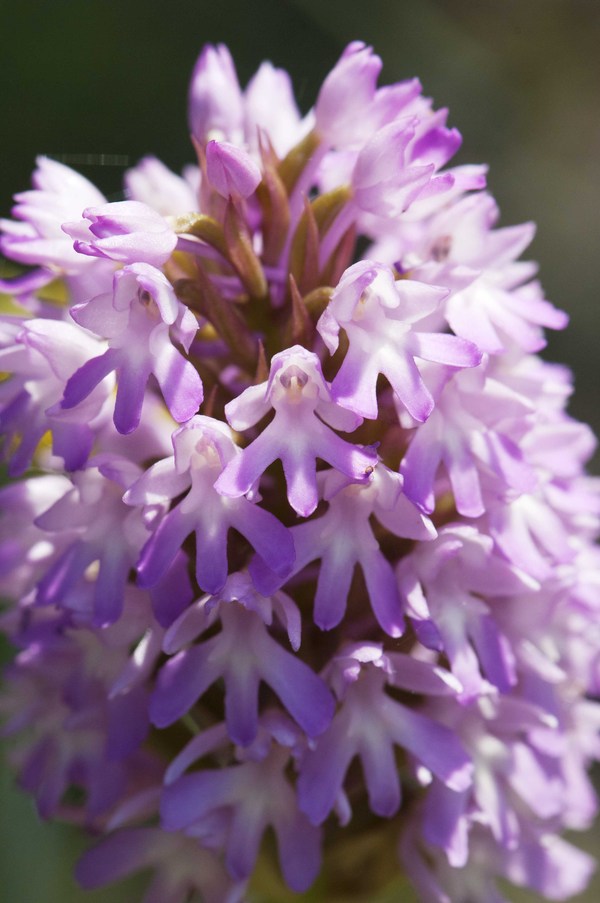
 (Anacamptis Pyramidalis - Pyramidal Orchid)

We moved house in March from the beach to the countryside … all of five kilometers away. We moved so that the dogs would have a garden to play in rather than a balcony to watch other dogs play from.  This meant that we had to find new walking routes to take them on, which was a rather funny experience as I walked backwards and forwards across the countryside following tracks and trails that I was convinced would go somewhere interesting, which actually clearly did not. After a week of constantly getting lost I resorted to Google earth. Good old Google earth, the old fashioned part of me wanted to work everything out on my own, the ease of technology won out in the end. After twenty minutes of fiddling with the satellite maps I had a route that I printed out and eagerly took the dogs out for the fourth walk of the day, determined, this time not to get lost.

It was all lefts and rights, up and down hills and at one point past a large field filled with all sorts of animals, which one of my dogs decided were fair game – nightmare - eventually we came right and between the dogs and I we started to remember the route. The mission changed from try and find the blasted route to enjoy the walk and have a look at what was growing in the fields along the side of the road.

 (Anacamptis Pyramidalis - Pyramidal Orchid)

It was on one of my walks that I quite literally stumbled on a wild orchid, like my mother I have a particular soft spot for orchids. They are fascinating, the range of colours sizes and shapes they come in is quite mind blowing. These particular orchids were tiny, I don’t honestly know how I spotted them but they were there growing on the side of a hill. Convinced that I had found a look alike I went back out with my camera armed with at 150mm macro lens, which would prove exceptionally useful as the flowers were quite literally the size of the nail on my little finger, a magnifying glass would have helped.  

(Ariadne's Ophrys - Ophrys cretica ssp ariadnae)


(Ariadne's Ophrys - Ophrys cretica ssp ariadnae)

I took a whole load of pictures and sent them off to the only two experts I know, my mother and my grandfather! Who confirmed what I thought. This set me off in a frenzy, I knew that wild orchids grew on the island, I also knew that they only flowered provided the conditions were right and when they did flower they only did so for a very short time. That was about all that I knew, so not knowing how long they flower for or when they were likely to reappear I spent the next week orchid hunting.


I walked kilometers around the tracks and trails surrounding our house, the dogs for once, thought that this new obsession was really rather wonderful, their walks where extended from two and a half kilometers to around nine. As the best way to hunt orchids is on foot it seemed ridiculous not to take them, puffing and panting we would all arrive home to have a look at the photos. At one point I even convinced my husband to come with me up the mountains to have a look, the more eyes the better!


After a month or so, much to my disappointment, they all started to disappear leaving behind mere skeletons of their former selves. Sadly but unavoidably we will have to wait until next year to see them again. Though I still keep one eye peeled in the hope that somewhere out there, there might still be an orchid that has not perished under the sun’s rays. 

(Heroic Butterfly Orchid - Orchis papilionacea ssp heroica)


I have tried to find the names for the orchids in the photographs, however I am no expert and if I have given them the wrong names please let me know and i will correct them.


Thursday, 14 June 2012

Olive Oil Production


Olive oil production is quite fascinating. From the day that the olives are harvested they have two to three days weather dependant – brilliant sunshine gives less time, overcast a little bit more time – to process the olives. This is due to the fact that the longer it takes to process the olives the higher the acidity becomes. The olives arrive by truck, van, car and sometimes even donkey and cart at the factory.

 (Sacks are stored with the family name of the farmer to avoid confusion)


The olives are off loaded and stored on pallets waiting their turn to be crushed and pressed into green gold. 

 (Loved the reuse of the bags!)


Once they have reached the front of the queue they are poured out of their cosy sacks and the process starts. First they must enter the system, a conveyor belt of sorts is the first hurdle. This conveyor belt takes them from the outer factory in to the processing side at the same time it gives them their first bath separating the olives from the leaves.


The system spits the leaves out into a barn where they are collected to be used for other purposes.


The next machine in line scoops the olives up and using high pressured jets and a constant shaking motion washes them again, this time it’s to remove any bugs or dirt which may have decided to come along for the ride.

The freshly washed olives are then fed into what can only be described as a giant tapenade machine, which gently heats them up and crushes them. Quite literally making a murky coloured tapenade, this machine is also responsible for pressing the olives and then filtering any small flesh and pip particals out. 


The pip and pressed flesh is, like the leaves, spat out by the system into a rather large mound on the outside of the factory. Like the leaves nothing is wasted and this waste now has two uses.  One it is taken away as it still contains olive oil, another factory will now use it after further processing for products such a soap and detergents. Two the processing plant needs energy to heat up the giant tapenade machine so rather than using a huge amount of electricity to make this possible the waste is used as a fuel.


By the time it has reached the end of the system fluorescent green oil is pouring out. This will now be tested for acidity and stored in giant vats where it will settle and become transparent with a hint of green.


It can take some farmers two to three months to bring in all of their olives and process them into oil. Most will sell it to the processing factory who in turn sell it on to major buyers. Some farmers have ventured into business themselves and sell it directly to major food traders around the world.  The Sitia olive oil has been known to turn up in some pretty far flung places. My parents have found Sitian olive oil as far a field as a Norwegian skiing chalet surrounded by kilometres and kilometres of snow!


Over the last decade or so olive groves have been abandoned by their owners who have left in favour of life in the city, good jobs and easy money. However with everything that is going on within this sun blessed country, there has been a noticeable number of old abandoned olive groves being rejuvenated and brought back to production as people leave the cities in favour of a calmer, slower and more reliable country life.

Wednesday, 13 June 2012

The Olive Harvest


Last December my family came to Crete to spend some time with us. I should at this point introduce my family, they are not normal … despite that fact that I live on a Greek island which the gods of sunshine have blessed with 300 days of sun a year, they are not content to sit around and take in the rays … Oh no not them. We must be doing something from dawn to dusk, it doesn’t matter what, it could be running, cycling, swimming, walking gorges, anything but it must happen and it must keep them out of trouble!

I am lucky in the sense that I have been fortunate enough to meet a lot of people here and for one reason or another my husband and I have been taken into many families which is lovely and gives us a different insight into life on the Island. 

December is harvest time for Olives, almost every Greek in Greece has a few olive trees.  Some people, like everything in life, have a few more than others. In Greece olive oil is green gold. The farmers work all year to ensure that their trees are happy and producing a good crop, Mother Nature has a huge hand to play here but she seems to shine down on the Island’s trees and they lap up her rays.

Olive oil is an interesting and complex product. There are many different varieties of olives in the areas surrounding Sitia the Koroneki variety is predominant. The olive is a lot smaller than the typical olive but it produces the best oil.  As you will have no doubt seen in the supermarket there are many different qualities of olive oil ranging from extra virgin cold pressed (the best) to plain olive oil.

To cut a very long story short the quality of olive oil is worked out through its percentage of acidity. The lower the acidity the better the oil. For example 0.2% to 0.8% acidity is considered extra virgin olive oil – this is the olive oil that you use in salads, never, let a Greek catch you using it to cook with, you will be hung drawn and quartered!  Then comes virgin olive oil this is 0.9% to 1.5% acidity and plain olive oil is 1.6% to 3%.  After that it becomes thick and gooey and is generally used for frying chips or in more modern times as bio fuel for cars.

Olive Oil with an acidity of 0.3% to 0.4% is considered the very best of the best and is highly sought after. Sitia and the surrounding area are extremely famous for their extra virgin olive oil, so much so that other countries buy the oil directly from the farmers and mix it with their own to bring the acidity of their oil down thereby giving them the right to use the Extra Virgin Olive Oil classification.  It is then marketed to the masses and ends up in supermarkets all over the world.


My family decided that they wanted to know more about the production of olive oil, they are always up for learning a bit more about the area which they are in. Thankfully it was harvest time and anyone who has olive trees will tell you that when it comes to the back breaking labour intensive harvest, the more hands that they can muster the merrier. Laughing at the fact that he thought my family – myself included but not my husband who knew better – were up for a challenge Manolis, a friend of ours, offered us the day out picking his olives. I think he thought that the sun had gone to our heads and that we were quite crazy to volunteer for the harvest, he normally pays his teams to bring in the olives. That should have been warning enough!

Harvesting the olives is a relatively simple task, nets are rolled out under the trees to catch the olives as they fall. The trees are then shaken or beaten with paddles to knock the olives off. These days modern technology has caught up with the process and most farmers have long poles with a turning head covered in long soft plastic wires, the tool resembles more an instrument of torture than anything else.  It is, however, extremely effective at the job for which it was designed. This machine is plugged into a very noisy generator, the power spins the heads which in turn knock the olives from their perch and along with the olives comes half a ton of leaves… But its not quite that simple, when you have all these machines working from different angles on the same tree you have olives flying in just about every direction imaginable - up, down, left and right and if you’re unfortunate the occasional olive has been known to whack you in the face with such intensity you feel like you have been rather viciously hit with a paint ball gun.


The main olive gathering team is split into two, one team knocks them off and the other separates the leaves from the olives and bags the olives up to be processed. Both teams work as hard and fast as humanly possible, the more they harvest the more they are paid. This meant that the family and I were not exactly helpful in the beginning! First we had to learn who did what. My brother being a young ox of a man was whisked off to batter the olives from the tree, the folks and I were put on gathering duty. Two Albanian ladies who were extremely professional and rather quick looked us up and down and gave us about two minutes of their time, we then set about the job - the three of us doing the work of one of them! 


It’s not that it’s hard work but it’s labour intensive, you spend the best part of the day doubled over and if, like us you’re not used to it, your back very quickly starts to complain. The olives might be small but when they’re all in one sack they weigh an absolute ton and the machines which knock them off the trees might well be light when you pick them up but when you’re holding these things for a while they start to get quite heavy. 


As the day went on we started to get the job done quite quickly and very soon we were almost as good as everyone else, almost as good but not quite up to their lightning standards. By the end of our time out in the fields the team had gathered well over a hundred bags. These were hauled up onto a truck to be taken to the processing factory where five kilos of raw product would become one kilo of olive oil. 

PROCESSING OLIVE OIL TO FOLLOW ...